
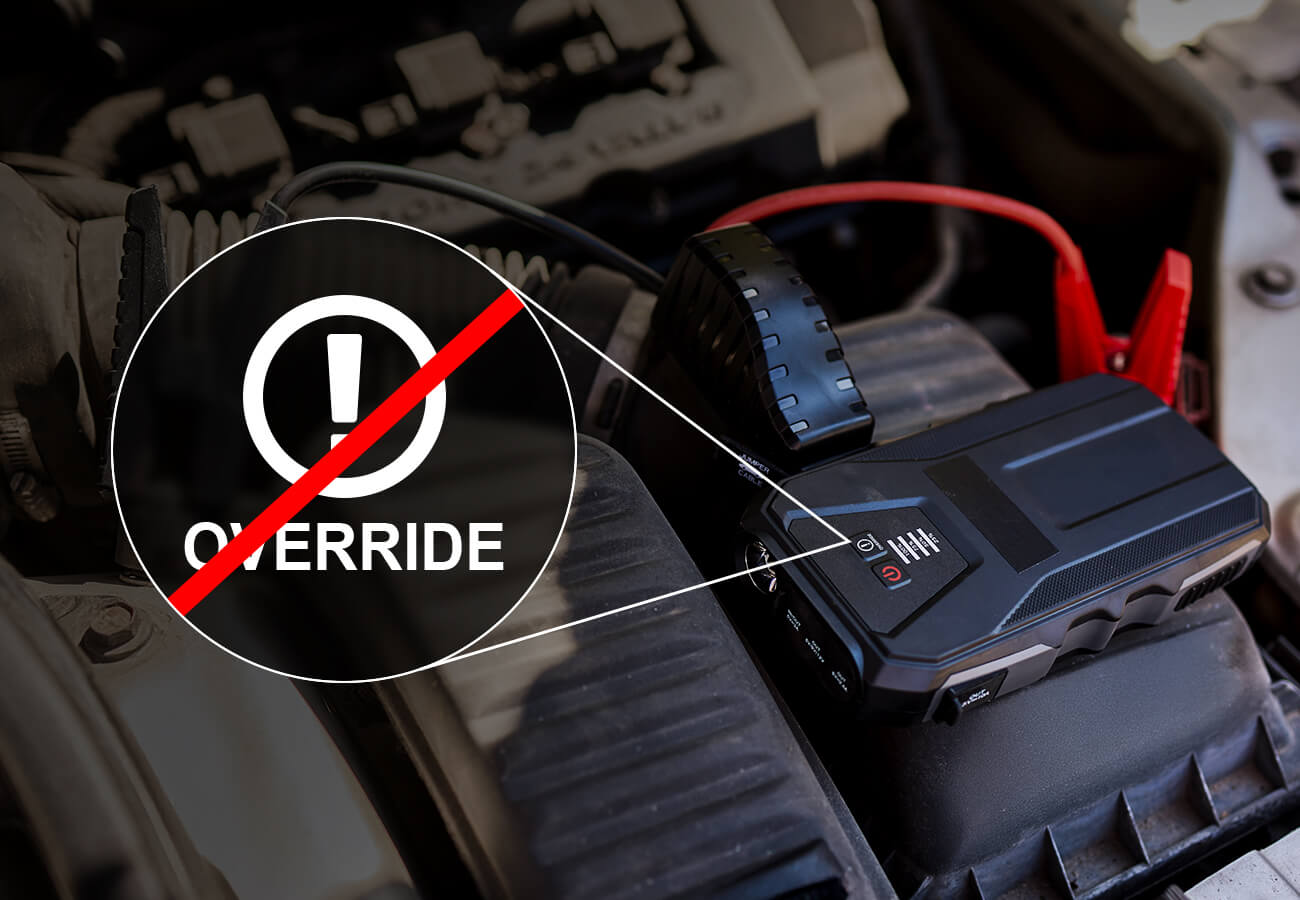
"Override" or "Manual" or "Boost" modes on Jump Starters - What do they Do and Why Should you Be Careful with Them?
If you’ve ever shopped for a jump starter, you may have noticed that some models include a mysterious button labeled “Override,” “Force Start,” or “Manual Mode.” On the surface, it sounds helpful — like a backup option in case the jump starter can’t detect your battery. But what most people don’t realize is that this feature can easily cause more harm than good, especially for drivers who aren’t electricians or battery experts.
What the Override Button Actually Does?

Most modern jump starters are designed with built-in protection systems. Before they send power to your battery, they run a quick check:
- Are the clamps connected correctly?
- Is the battery voltage safe?
- Is there a short circuit?
- Is the battery severely damaged or internally shorted?
If something looks wrong, the jump starter blocks the power to keep you and your vehicle safe.
The override button disables all of those protections.
When you press it, you tell the jump starter:
“I don’t care what you’re sensing… just send full power anyway.”
That means:
- No polarity protection
- No over-current protection
- No short-circuit protection
- No voltage safety check
It forces electricity through the clamps even if the situation is unsafe.
Why This Can Go Bad Fast?

Using override mode on a healthy battery is usually fine.
Using it on a damaged, frozen, sulfurized, or shorted battery is a different story.
Here’s what can happen when you force power into the wrong situation:
1. Sparks and instant cable melting
If the battery is internally shorted, the surge can cause mini-arcs, melted clamps, or sudden spark bursts.
2. Damage to your vehicle’s electronics
Many newer vehicles have sensitive ECUs, sensors, and modules. A forced surge can fry components that were never designed for uncontrolled current.
3. Overheating inside the jump starter
Override mode removes the safety limiters, so internal circuits can overheat — sometimes permanently.
4. Risk of battery swelling or venting
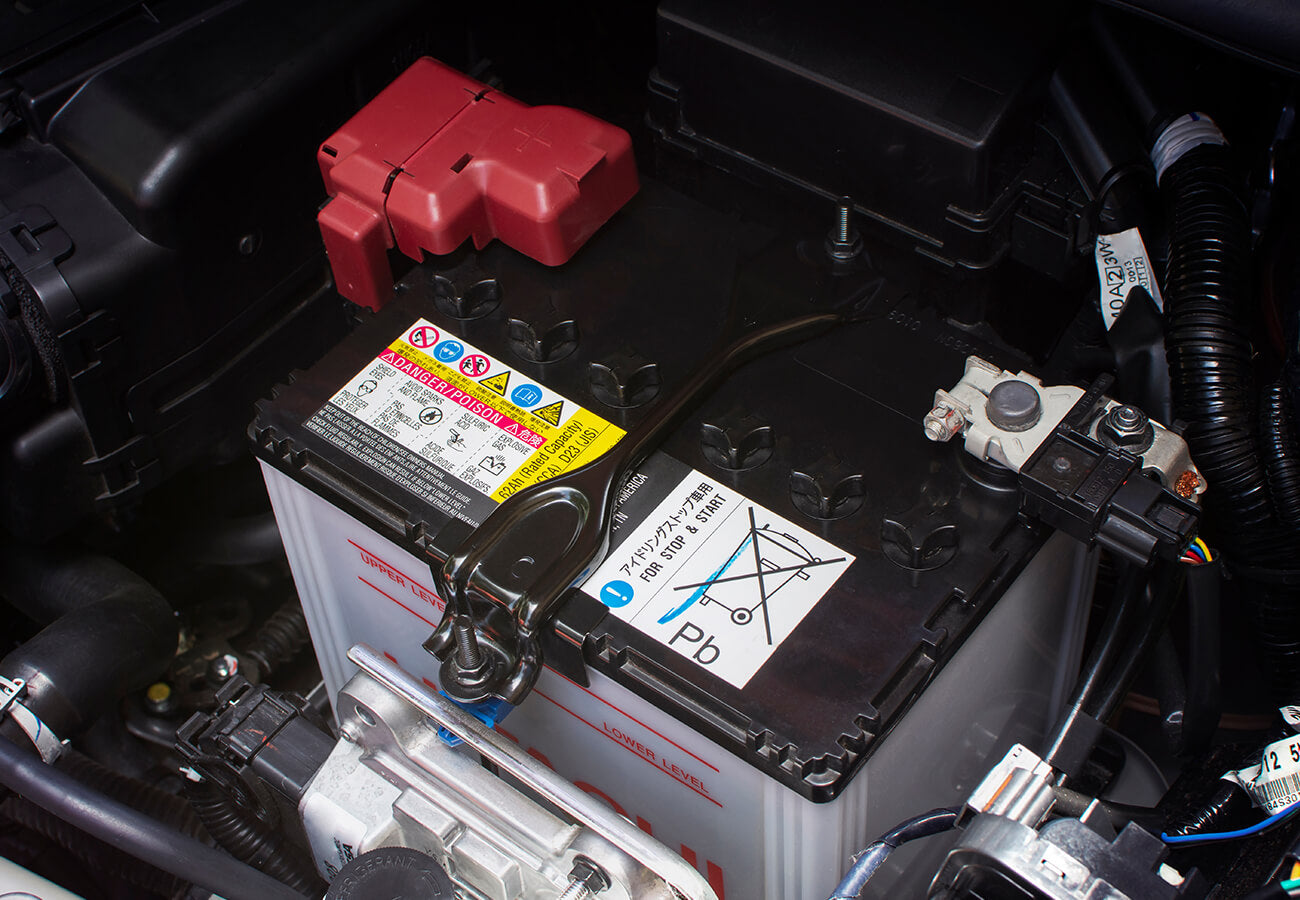
If the car battery is deeply damaged or frozen, forcing a jump can cause the battery to vent gases or, in extreme cases, fail violently.
Most consumers are not aware of these risks, and the button gives them a false sense of confidence — or worse, encourages them to use it incorrectly.
Why Some Brands Include It?

The only reason override exists is to deal with extremely dead batteries (usually below ~2V) where the jump starter can’t detect anything. By forcing power through, the hope is to “wake up” the battery long enough to start the vehicle.
But most users don’t know when it should or shouldn’t be used — and that’s the problem.
Why TYPE S Jump Starters Don’t Include an Override Button?

This is where TYPE S takes a different approach.
Instead of giving consumers a dangerous “force power” button, TYPE S designs its jump starters so that all safety protections remain active at all times.
If a battery is so damaged that it can’t be safely detected, forcing power into it isn’t the right solution. It’s safer to maintain all the protections rather than bypass them.
Safe Alternatives to Override Mode
If your jump starter can’t detect your battery, here’s what you should check first:
Make sure the clamps are solidly connected
Paint, corrosion, or rust can prevent the jump starter from detecting voltage.
Try a different ground point
Often, the negative clamp works better on a clean metal surface instead of the battery post.
Let the jump starter pre-charge for a moment
Some smart jump starters push a low trickle to “wake” borderline batteries without forcing full power.
Test the battery
If a battery is below ~2V or internally shorted, it may actually be unsafe to jump at all — and override mode would just push it over the edge.
Final Thoughts

Override buttons aren’t inherently evil — but they’re way too easy to misuse, and the consequences can be expensive or dangerous. For most drivers, the safer option is a jump starter that refuses to send power unless everything checks out.
That’s exactly why TYPE S jump starters avoid including override mode.
The goal is to help you start your car, not risk sparks, melted clamps, or damaged electronics.

Leave a comment
This site is protected by hCaptcha and the hCaptcha Privacy Policy and Terms of Service apply.