
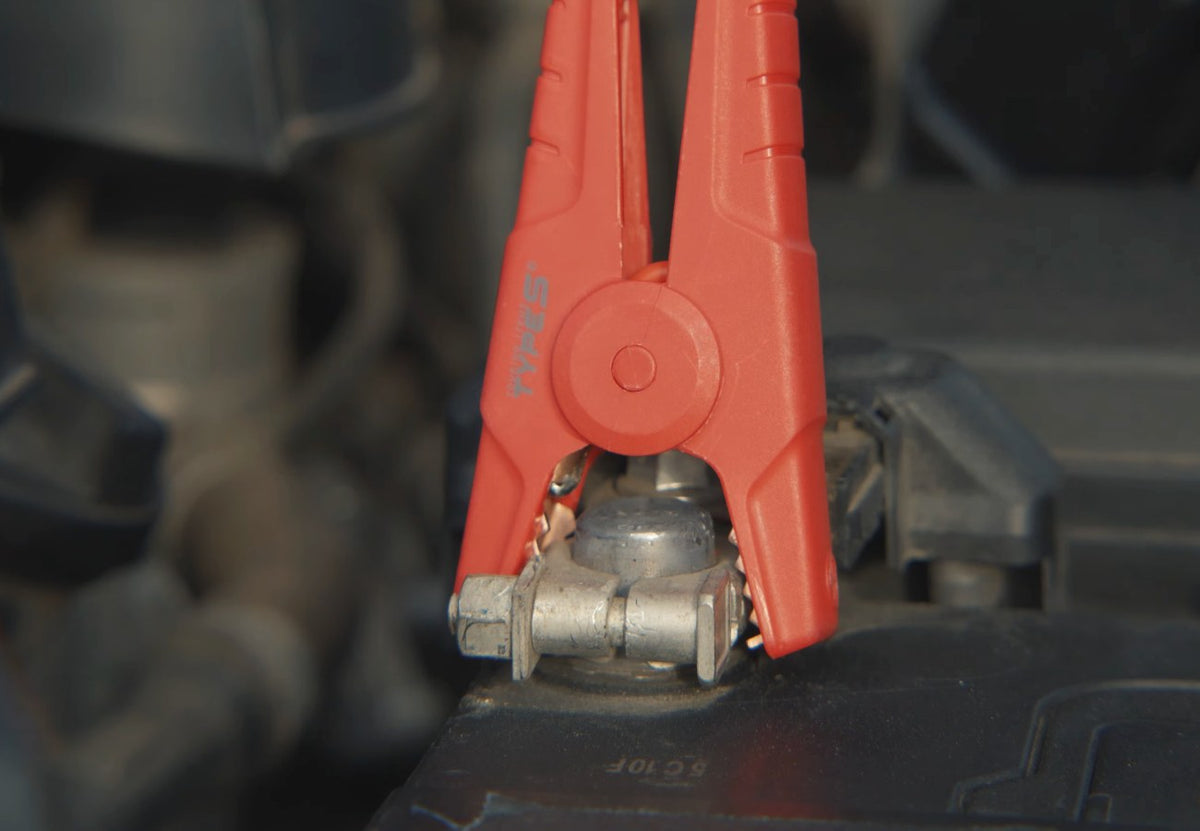
Jump-starting a car can feel intimidating, especially for anyone who isn’t familiar with battery terminals or jumper cables. One of the most common fears people have is accidentally connecting the clamps to the wrong battery posts. Without protection, that simple mistake can cause sparks, blow fuses, or damage electronics.
This is exactly why reverse polarity protection exists, and why it’s one of the most important safety features in a modern jump starter. In this guide, we’ll explain what reverse polarity is, how reverse polarity protection works, and how to connect your jump starter the right way.
What Does “Reverse Polarity” Mean?
Every car battery has a positive (+) terminal and a negative (–) terminal. When the clamps are connected correctly (red to positive, black to negative), electricity flows safely and predictably.
Reverse polarity happens when the clamps are accidentally swapped: the red clamp goes on the negative post, or the black clamp goes on the positive post. It’s an easy mistake, especially in bad weather, low light, or when you’re stressed and in a hurry.

Why Connecting the Clamps Backwards Is Dangerous
If a jump starter or set of jumper cables doesn’t have protection built in, reversing the clamps can:
- Create sudden sparks at the battery
- Blow fuses in the vehicle
- Damage the jump starter
- Damage the alternator or other parts of the vehicle’s electrical system
That’s why modern protection systems are so important. They help keep a simple human error from becoming a costly or dangerous accident.
How Reverse Polarity Protection Works on a Jump Starter
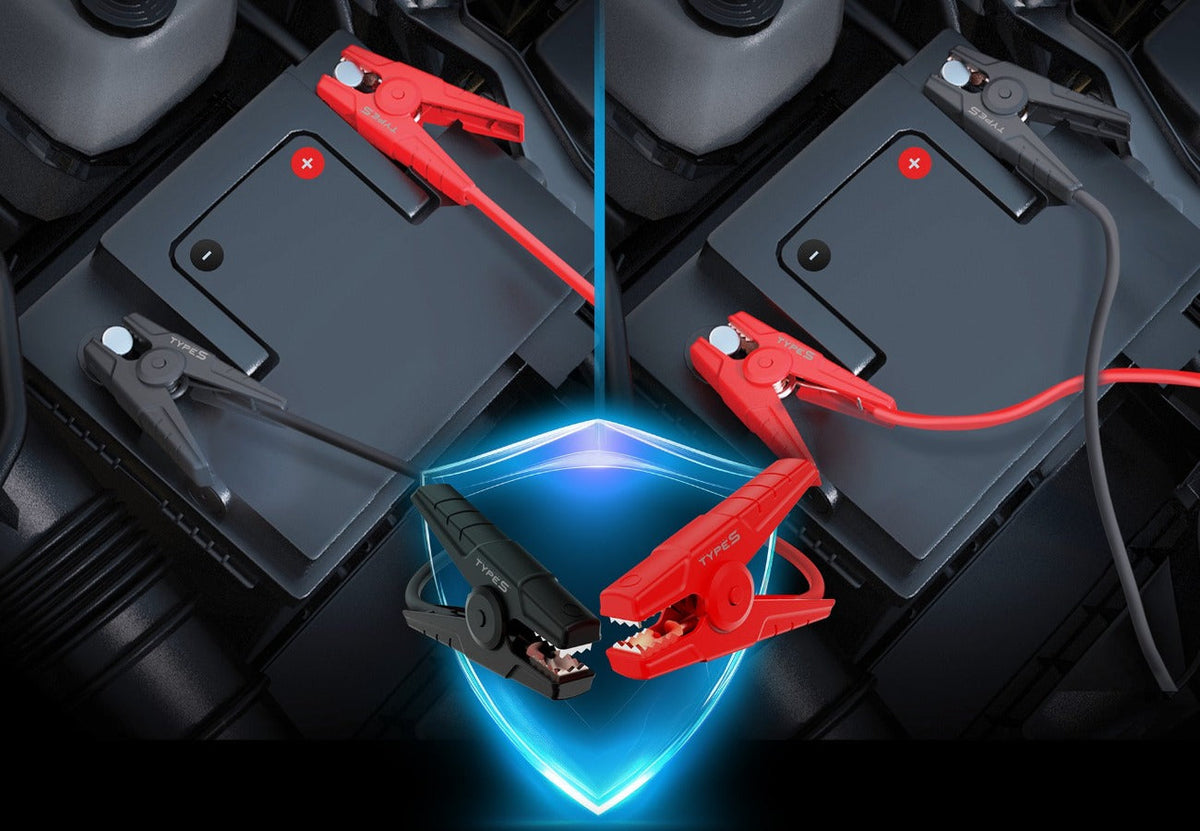
Reverse polarity protection works like a safety gate. When the jump starter detects that the clamps are connected the wrong way, it blocks power from flowing through the clamps, helping prevent the sparks and current surge that a backward connection could otherwise cause.
Many jump starters also give you a warning, such as an indicator light, alert, or on-screen message, so you know to switch the clamps. Once you correct the connection, you can continue with the jump start.
Reverse polarity protection usually works alongside other safety features, such as short-circuit protection and over-current protection, to cover the most common jump-starting mistakes.
Why Reverse Polarity Protection Matters for Everyday Drivers
Not everyone is familiar with car batteries, and even experienced drivers can make a mistake when they’re cold, tired, or stranded at night. Reverse polarity protection gives you peace of mind. If you mix up the clamps, the protection helps prevent damage, and you simply correct the connection and try again.
How to Connect a Jump Starter Correctly
- Turn everything off – Switch off the vehicle and any accessories like lights and the radio.
- Find the terminals – Locate the positive (+) and negative (–) battery terminals. The positive terminal is often marked red or covered by a red cap.
- Connect the red clamp – Attach the red clamp to the positive (+) terminal.
- Connect the black clamp – Attach the black clamp to the negative (–) terminal, or to a clean, unpainted metal ground point if your jump starter’s manual recommends it.
- Follow your jump starter’s guidance – Check the indicator or screen, then start the vehicle.
- Disconnect in reverse order – Remove the black clamp first, then the red clamp.
Always follow the instructions in your jump starter’s user manual.
How TYPE S Jump Starters Handle Reverse Polarity
The TYPE S P10 Portable Jump Starter includes smart jumper cables with reverse-polarity and spark-proof protection, which help prevent damage if the clamps are attached incorrectly. The P10’s safety features also include:
- Polarity protection
- Short-circuit protection
- Over-discharge and low voltage protection
- Reverse charging protection
- Overheat and temperature control protection
- Spark-proof clamps
Pair all of that with the P10’s Powerguide™ Assistance Display, a color screen with animated, step-by-step jump-starting guidance, and it’s easier to connect everything correctly in the first place.

You’ll also find reverse polarity protection on the TYPE S DC10X Jump Starter + Wireless Power Bank and the Essential Car Jump Starter + Power Bank. To learn more about the P10, check out Jump-Starting Made Smarter: Meet the TYPE S P10.
Reverse Polarity Protection vs. Cross-Jump™
Reverse polarity protection blocks power when the clamps are on the wrong terminals, so you have to switch them before you can jump start. Some TYPE S jump starters go one step further.
The TYPE S PowerGuide jump starters (1000A, 1500A, and 2000A), available in select Walmart stores, feature Cross-Jump™ Polarity Safety. You can connect the clamps to either battery terminal and still jump start your vehicle, with no need to switch them.

Learn more in Can You Hook Up a Jump Starter Backwards? Meet TYPE S PowerGuide with Cross-Jump™.
Reverse Polarity Protection FAQ
What happens if you connect a jump starter backwards?
On a jump starter with reverse polarity protection, the unit blocks power and usually gives you a warning so you can switch the clamps. Without protection, connecting the clamps backward can cause sparks, blown fuses, or damage to the jump starter or vehicle.
Does reverse polarity protection mean I can connect the clamps either way?
Not on most jump starters. Reverse polarity protection prevents damage, but you still need to switch the clamps before you can jump start. TYPE S PowerGuide jump starters with Cross-Jump™ are designed to jump start with the clamps on either terminal.
Which clamp goes on first when jump-starting a car?
Connect the red clamp to the positive (+) terminal first, then the black clamp to the negative (–) terminal (or a clean metal ground point if your manual recommends it). Remove them in reverse order: black first, then red.
Is reverse polarity protection the same as short-circuit protection?
No. Reverse polarity protection covers clamps connected to the wrong terminals. Short-circuit protection covers current taking a direct, uncontrolled path, such as the clamps touching each other. Good jump starters include both.
Conclusion
Reverse polarity protection is one of those features you hope you never need, but you’ll be glad it’s there. It helps keep a simple mix-up from turning into sparks, blown fuses, or damaged equipment, so you can fix the connection and get back on the road.
Looking for a jump starter with built-in reverse polarity protection? Check out the TYPE S P10 Portable Jump Starter.

Leave a comment
This site is protected by hCaptcha and the hCaptcha Privacy Policy and Terms of Service apply.