
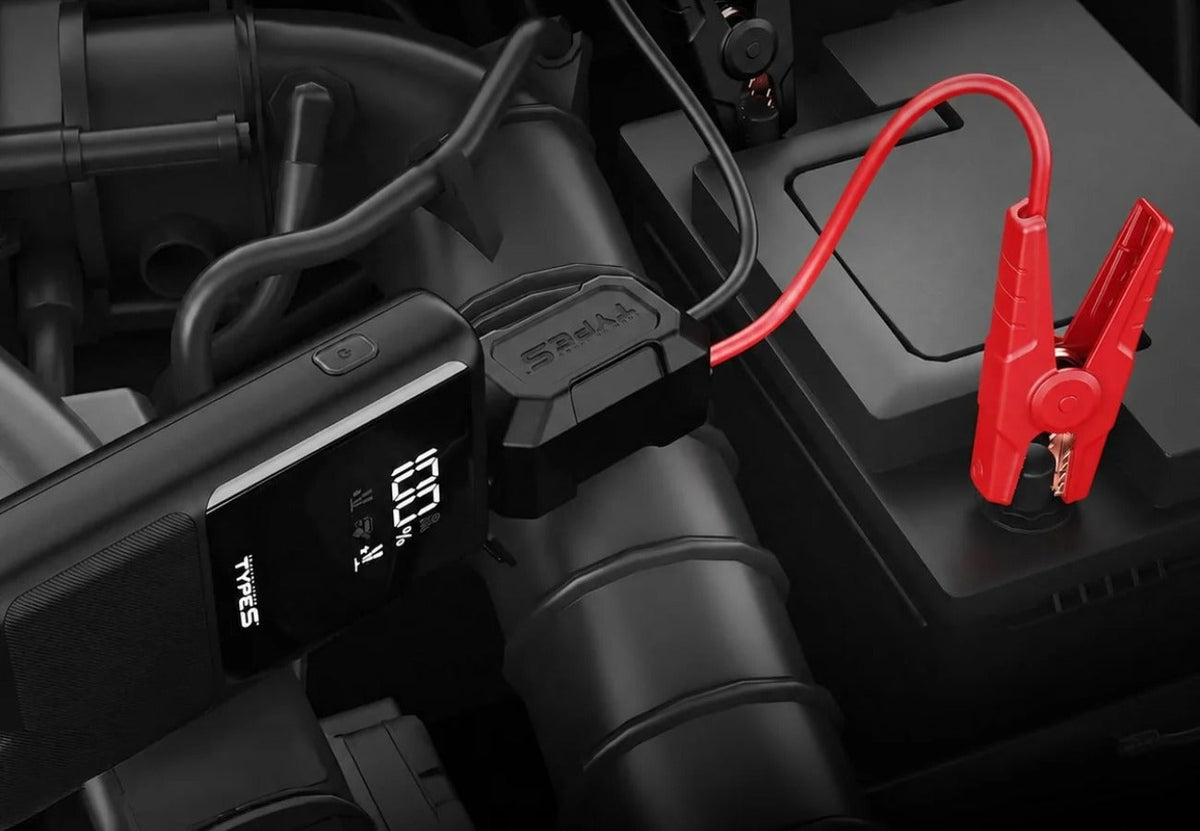
When people think about jump-starting a car, they usually picture the clamps, the battery, and the moment the engine fires up. What most drivers never think about is one of the biggest risks in the entire process: accidentally creating a short circuit. It’s one of the fastest ways to damage a battery, blow a fuse, or cause sparks, which is exactly why short-circuit protection is such an important part of any modern jump starter.
In this guide, we’ll explain what a short circuit is, why it’s dangerous during a jump start, and how short-circuit protection on a jump starter keeps you, your car, and your jump starter safe.
What Is a Short Circuit? (Simple Version)
In a normal electrical system, power flows through a controlled path. A short circuit happens when electricity suddenly finds a shortcut: a low-resistance path it was never supposed to take.
Imagine trying to funnel water through a garden hose, then suddenly punching a giant hole in the hose. Everything dumps out in the wrong place all at once. That’s essentially what a short circuit is, but with electricity instead of water.

In a jump-start scenario, a short circuit can happen if:
- The positive and negative clamps touch each other
- A metal tool or wrench bridges the clamps
- The car battery has an internal failure
- The cables connect to something they shouldn’t
When it happens, current rushes through the shortcut uncontrolled, instantly.

Why Short Circuits Are Dangerous When Jump-Starting a Car
A short circuit lets far more current flow than the system was designed to handle, and it happens in a fraction of a second. That surge can:
- Overheat the cables
- Melt the clamp tips
- Damage the jump starter
- Blow fuses in the vehicle
- Create sudden sparks
- Stress or damage the battery
It’s fast, unexpected, and often happens before you even realize what went wrong.
How Short-Circuit Protection Works on a Jump Starter
Short-circuit protection is like a fast-reacting electrical shield. The moment the jump starter detects that power is flowing in a way it shouldn’t (too much current, too fast, or through a dangerous path), it cuts the output instantly.
This happens so quickly that most users never notice. What could have been sparks or melted metal simply becomes a harmless moment where the jump starter refuses to send power, usually with a warning light or alert telling you to check the connection.
On TYPE S jump starters, the clamps are part of the safety system. The TYPE S P10 and DC10X both come with smart jumper cables that feature reverse-polarity and spark-proof protection, and on the DC10X, the included spark-proof jumper clamps help protect against reverse polarity, short circuits, over-discharge, overheating, and other common connection errors. If you ever need a replacement set for the P10, TYPE S Smart Circuit Jumper Cables Gen 4 are available.

Short-circuit protection usually works alongside other safety features, such as over-current protection, reverse polarity protection, and overheat protection, to cover the most common jump-starting mistakes.
Why Short-Circuit Protection Matters for Everyday Drivers
Most people using a jump starter aren’t mechanics. They’re stressed, the car won’t start, it’s cold, it’s dark, or they’re running late. Mistakes happen, even to experienced drivers.
Short-circuit protection acts as a safety net, making sure a simple slip (like the clamps touching for a split second) doesn’t turn into a bigger problem. It lets you focus on getting your car started instead of worrying about what could go wrong.

What to Do If Your Jump Starter Detects a Short Circuit
- Stop and disconnect – Remove the clamps from the battery.
- Check the clamps – Make sure they aren’t touching each other or any metal tools.
- Reconnect correctly – Red clamp to the positive (+) terminal, black clamp to the negative (–) terminal or a clean, unpainted metal ground point.
- Try again – If the jump starter still won’t send power, the battery may be damaged or internally shorted. Have it tested before trying again.
Why TYPE S Jump Starters Keep Short-Circuit Protection Always On
TYPE S jump starters are designed with always-on short-circuit protection. There are no buttons to override it, no hidden modes that bypass safety, and no risky “force start” features.
That’s on purpose. Disabling short-circuit protection is one of the fastest ways to damage a vehicle or a jump starter. Learn more in The Truth About “Override” Buttons on Some Jump Starters.
The TYPE S P10, DC10X, and Essential jump starters each list a full set of safety protections, including:
- Short-circuit protection
- Reverse polarity protection
- Over-discharge and low voltage protection
- Reverse charging protection
- Overheat and temperature control protection
- Spark-proof clamps
Shop the TYPE S P10 Portable Jump Starter, the DC10X Jump Starter + Wireless Power Bank, and the Essential Car Jump Starter + Power Bank. Not sure which one fits your vehicle? Read Which TYPE S Jump Starter Is Right for Me?

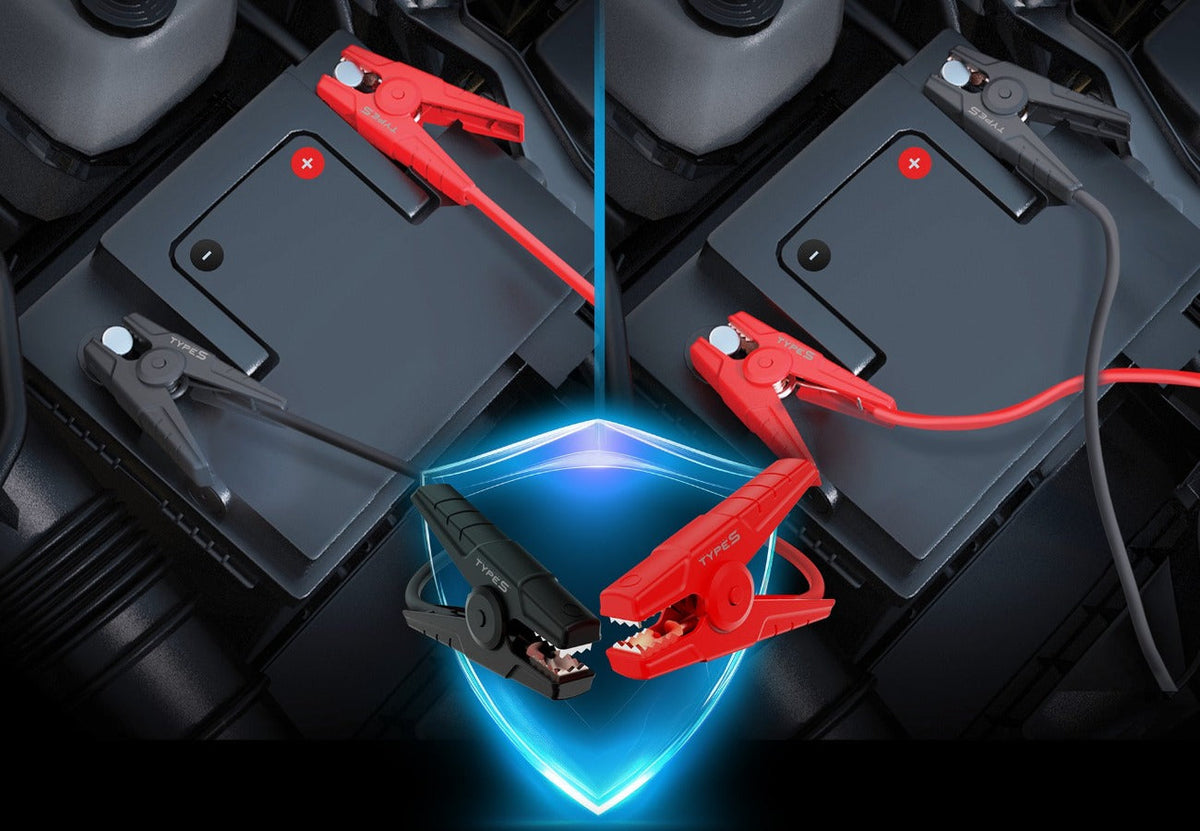
No Wrong Way to Clamp: TYPE S PowerGuide with Cross-Jump™ Polarity Safety
Worried about mixing up red and black? The TYPE S PowerGuide jump starters, available in select Walmart stores, feature Cross-Jump™ Polarity Safety. You can connect the clamps to either battery terminal and still jump start your vehicle.
- TYPE S PowerGuide 1000A Jump Starter – Up to 6.0L gas / 4.0L diesel engines
- TYPE S PowerGuide 1500A Jump Starter – Up to 7.0L gas / 4.5L diesel engines
- TYPE S PowerGuide 2000A Jump Starter – Up to 9.0L gas / 6.0L diesel engines

Cross-Jump™ takes the guesswork out of which clamp goes where, but it does a different job than short-circuit protection. Even when it doesn’t matter which terminal each clamp is on, the two clamps should never touch each other or be bridged by a metal tool. That’s the kind of mistake short-circuit protection is designed to catch.
Safety isn’t optional, especially when the device is meant for everyday drivers.
Short-Circuit Protection FAQ
What is short-circuit protection on a jump starter?
It’s a safety feature that detects when current is flowing through an unintended path, like the clamps touching each other, and instantly cuts power before sparks, heat, or damage can occur.
What happens if jump starter clamps touch?
On a jump starter with short-circuit protection, the unit stops sending power and usually shows a warning. Without protection, touching clamps can cause sparks, melted clamp tips, or damage to the jump starter.
Is short-circuit protection the same as reverse polarity protection?
No. Reverse polarity protection prevents damage when the clamps are connected backward. Short-circuit protection stops power when current takes a direct, uncontrolled path. Good jump starters include both.
Do I still need short-circuit protection if my jump starter works with the clamps either way?
Yes. Features like Cross-Jump™ on TYPE S PowerGuide jump starters let you connect the clamps to either battery terminal, but a short circuit is a different problem: the clamps touching each other or a metal tool bridging them. Polarity safety and short-circuit protection cover different risks.
Can I turn off short-circuit protection?
Not on TYPE S jump starters. All safety protections stay active at all times, because bypassing them is one of the easiest ways to damage a vehicle or the jump starter.
Final Thoughts
Short-circuit protection is one of those features you never think about until the moment you need it. It works in the background, watching for dangerous electrical conditions and shutting things down instantly before anything goes wrong.
That silent protection is exactly what makes a good jump starter safe, especially for people who just want their car to start without dealing with electrical risks. Ready to upgrade your emergency kit? Check out the TYPE S P10 Portable Jump Starter.


Leave a comment
This site is protected by hCaptcha and the hCaptcha Privacy Policy and Terms of Service apply.